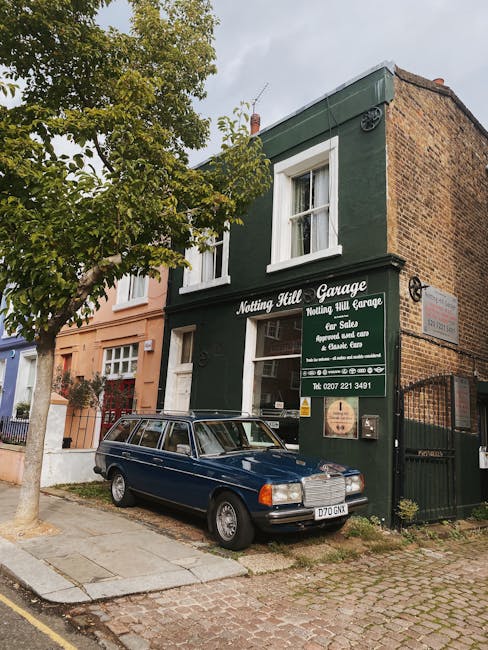
Notting Hill Gate: Best Loading Bays & Van Access
If you are planning a move, delivery, or furniture drop-off near Notting Hill Gate, the hard part is rarely the lifting. It is usually the access. A van that cannot stop safely, a loading bay that is occupied, or a narrow street that turns a simple job into a timed puzzle can change the whole day. This guide explains Notting Hill Gate: Best Loading Bays & Van Access in plain English, with practical advice for residents, landlords, businesses, and anyone arranging a removal in the area.
Notting Hill is lively, busy, and beautiful, but it also has the classic West London access challenge: limited stopping space, controlled parking, and roads that are not designed for oversized vehicles or last-minute improvisation. The good news? With the right planning, you can make van access work smoothly. Below, you will find a clear breakdown of how loading bays are used, what to check before the van arrives, and how to avoid the common mistakes that create delays.
For broader planning support, you may also find the services overview useful, especially if your move includes packing, furniture handling, or short-notice scheduling. And if you are comparing providers, it helps to understand how a local team approaches tight-access jobs such as man with a van in Notting Hill or more complex house removals in Notting Hill.
Table of Contents
- Why Notting Hill Gate loading bays and van access matter
- How loading bays and van access work in practice
- Key benefits and practical advantages
- Who this is for and when it makes sense
- Step-by-step guidance
- Expert tips for better results
- Common mistakes to avoid
- Tools, resources and recommendations
- Law, compliance, standards and best practice
- Options, methods and comparison table
- Case study or real-world example
- Practical checklist
- Conclusion
- Frequently asked questions
Why Notting Hill Gate loading bays and van access matter
Van access sounds like a small detail until you are the one trying to unload a sofa on a road with no legal stopping space. In Notting Hill Gate, that detail becomes central. The area sees a constant mix of residential moves, shop deliveries, office drop-offs, construction traffic, and everyday parking pressure. That means a driver cannot simply arrive and assume there will be room outside the building.
A loading bay is more than a convenience. It is often the difference between a controlled, safe unloading process and an awkward, rushed one. If the van can stop close to the property, your crew can move items faster and with less risk of damage. If it cannot, you may need to park farther away, carry items across a greater distance, or re-time the job entirely.
This matters even more in streets where access is influenced by bus routes, yellow lines, limited waiting periods, or local congestion. A move that starts five minutes late can snowball. The driver circles, the bay is occupied, the lift time slips, and everyone ends up doing more waiting than working. Truth be told, that is where many "simple" moves get messy.
There is also a trust angle. A well-planned access strategy shows the removal team has thought ahead. It usually means fewer surprises, better protection for goods, and a calmer customer experience. If you are comparing local options, you may want to read about removal services in Notting Hill and how they handle access-sensitive jobs.
Expert summary: In busy parts of Notting Hill Gate, access planning is not an admin task. It is part of the move itself. The best outcome usually comes from treating the loading bay, vehicle size, and timing as one joined-up decision.
How Notting Hill Gate loading bays and van access work in practice
Loading bays are designated spaces intended for short-term loading and unloading. In a typical move, a van may use one of these spaces for a limited period while items are transferred between property and vehicle. The exact rules vary by street, sign, and local restrictions, so the golden rule is simple: never assume a bay is free, suitable, or available for the amount of time you need.
In practical terms, access works like this:
- The driver identifies a legal place to stop near the property.
- The team unloads or loads efficiently within the available window.
- Items are carried between the vehicle and the property as directly as possible.
- If the bay is unavailable, the plan shifts to a safer alternative, such as a different bay, a timed arrival, or a short carry from a nearby legal stopping point.
The key challenge in Notting Hill Gate is that access is not uniform. Some roads are easier than others, and the same street can feel completely different depending on the time of day. Morning activity, school runs, commuter traffic, and retail deliveries can all affect whether a van can stop without creating problems.
For narrow or busy side streets, local knowledge matters. That is why planning around the route can be just as important as the building itself. If your move touches Portobello or the tighter W11 roads, this guide to Portobello Road moves and narrow W11 streets can help you think through the access side before the day arrives.
Van access also depends on vehicle type. A compact removal van may fit more easily into a bay or tight road position than a larger lorry-style vehicle. That does not mean bigger is always better. In many Notting Hill jobs, a smaller, well-organised vehicle is the smarter choice because it reduces access risk and speeds up manoeuvring.
Key benefits and practical advantages
The real benefit of good loading bay planning is not just convenience. It improves the whole move from start to finish.
- Less carrying distance: Items travel fewer metres between the property and the vehicle, which saves time and effort.
- Lower damage risk: Shorter carries mean fewer chances to scrape walls, knock corners, or drop heavy items.
- Better timing: A controlled bay window helps the team stay on schedule, especially in a busy area.
- Improved safety: Fewer awkward crossings and less time spent in traffic reduces risk for everyone involved.
- Less stress: When the vehicle can stop close to the entrance, the day feels far more manageable.
There is a less obvious advantage too: good access planning helps the removal team work more professionally. A crew that can unload methodically will usually protect furniture better, keep pathways clearer, and avoid the rushed, stop-start pace that tends to cause mistakes.
If your move includes larger or delicate items, this becomes even more valuable. For example, a piano, wardrobe, or sectional sofa is much easier to manage when the van is positioned correctly. That is one reason people often combine access planning with specialist support such as piano removals in Notting Hill or furniture removals in Notting Hill.
Who this is for and when it makes sense
Loading bay and van access planning matters for far more people than first-time movers. In fact, it becomes most useful when the job is time-sensitive, bulky, or location-specific.
Home movers
Flat moves, house moves, and downsizing jobs in Notting Hill Gate often depend on access more than people expect. A building might be easy to reach on foot but awkward for a van. That is especially true with upper-floor flats, shared entrances, and limited forecourt space. If your move is residential, it may be worth comparing flat removals and house removals depending on the property layout.
Landlords and letting agents
If you manage a turnover between tenants, access planning helps avoid last-minute disputes, neighbour complaints, and delays that affect the next occupancy date. Even a small delay can ripple through cleaning, key handover, and inventory checks.
Local businesses
Office stock, equipment, and deliveries often need a tidy loading window. A van that can park legally and close to the entrance keeps the working day moving. For commercial jobs, see office removals in Notting Hill and broader removal companies in Notting Hill if you need structured support.
Students and short-term residents
Even a relatively small move can be complicated if the property is in a controlled street with restricted stopping. This is one of those situations where booking a well-prepared local team can save a surprising amount of hassle. If you are moving a lighter load, the student removals service may be more appropriate.
Urgent or same-day jobs
Short-notice access issues are common. Maybe the original van is too large, or a bay is blocked on the day. In these cases, responsiveness matters. For urgent jobs, same-day removals in Notting Hill can be the practical fix.
Step-by-step guidance
If you want the smoothest possible loading bay experience, follow a simple process. It does not need to be complicated, but it should be deliberate.
- Check the exact pickup and drop-off address. Do not rely on the area name alone. A difference of one street can completely change access.
- Look at the building entrance and nearby road layout. Note whether there is a curb cut, shared courtyard, gated entry, or unusually narrow section.
- Identify likely stopping points. Find the most realistic loading bay or legal waiting area near the property.
- Match the vehicle to the street. Smaller vans often make sense in tighter roads. Bigger is not automatically better.
- Plan the timing. Busy periods can make even a suitable bay harder to use. Mid-morning or midday can be easier than rush-hour windows in some streets.
- Prepare items before the van arrives. Boxes should be sealed, furniture should be disassembled where possible, and fragile items should be grouped sensibly.
- Keep someone available to direct the crew. If the driver needs a quick decision on bay position or entry access, you do not want a long wait for approval.
- Build in a fallback plan. If the main loading point is occupied, know where the next best legal option is.
That last step is often overlooked. It sounds minor, but it can save twenty minutes of circling. In a busy area, twenty minutes is enough time for the whole day to go sideways.
For practical packing support that makes the loading process easier, take a look at packing and boxes in Notting Hill. Proper packing makes the access problem smaller because the crew can work more efficiently once the van is in place.
Expert tips for better results
Here are the details experienced movers tend to focus on. They are simple, but they matter.
- Arrive with the van ready to work. Fuel, route, documentation, and equipment should all be sorted before entering the area.
- Use the shortest possible carry route. Even if the bay is not directly outside the door, aim for the least awkward walk.
- Protect doorways and floors before heavy movement starts. This is especially important in older buildings where surfaces can be easily marked.
- Keep the heaviest items closest to the van doors. This reduces shuffling and speeds up loading.
- Use a spotter when reversing or aligning to a tight bay. A second pair of eyes is cheap insurance against scrapes.
- Break the job into phases. Large furniture out first, then boxes, then loose items. It keeps the van organised.
One practical observation from local jobs: if a street looks busy, it usually is. I know that sounds obvious, but it is easy to underestimate how quickly a parked car, a delivery vehicle, or a passing bus can interfere with access. In Notting Hill Gate, a clean plan beats optimistic guessing almost every time.
If you want to understand how local providers approach these jobs, browse the company background on about us and the wider removals in Notting Hill page. Experience in the area is not a luxury here; it is part of the service.
Common mistakes to avoid
The most expensive access mistakes are usually simple ones.
- Assuming the bay is available. A loading bay is not the same as reserved private parking. Someone else may already be using it.
- Bringing the wrong vehicle size. A vehicle that is too large may waste time, block traffic, or fail to fit comfortably at the kerb.
- Ignoring height and width constraints. Tree branches, low signs, bollards, and tight corners can matter as much as road width.
- Leaving packing until the last minute. Delays inside the property quickly turn into delays outside it.
- Not checking the building rules. Some flats, estates, or managed buildings have their own access requirements.
- Forgetting neighbour and traffic impact. A rushed stop can create complaints or attract enforcement attention.
- Not having a backup bay or holding point. If the first option is blocked, you need to pivot quickly.
A lot of these mistakes come from treating access as a background detail. In reality, it is part of the logistics chain. If one link fails, the entire move feels harder than it needs to be.
Tools, resources and recommendations
You do not need specialist software to plan a move, but a few simple tools can make a big difference.
| Tool or resource | Why it helps | Best use |
|---|---|---|
| Street-level map view | Shows road width, nearby junctions, and possible stopping points | Pre-checking access before booking |
| Phone camera | Captures the bay, entrance, and any signs or restrictions | Sharing details with the removal team |
| Measured dimensions of large items | Helps match van space and doorway clearance | Furniture, piano, and bulky item moves |
| Building concierge or landlord contact | Can clarify local entry rules or loading preferences | Flats, estates, and managed properties |
| Move-day checklist | Reduces forgotten items and delays | Any residential or commercial move |
For reader journeys that extend beyond the loading bay itself, these pages can also be genuinely useful: pricing and quotes if you are comparing budgets, insurance and safety if you want peace of mind, and storage in Notting Hill if your move needs temporary holding.
If your move is complex, do not underestimate the value of pre-move communication. A short message with photos of the street, entrance, and bay area can help the team arrive with the right vehicle and expectations. That is often the difference between a neat local move and a day of improvisation.
Law, compliance, standards and best practice
This section is about sensible, low-risk practice rather than legal fine print. Rules can vary by location, street marking, parking restriction, and local authority policies, so it is wise to verify any restriction directly where needed. In London, loading and unloading in controlled areas should always be treated carefully. The safest approach is to use legal stopping places, obey signage, and avoid making assumptions about permit rules or grace periods.
Best practice usually includes:
- checking the street sign before stopping
- not blocking crossings, entrances, or emergency access
- using a vehicle suitable for the road and bay
- keeping loading times efficient and tidy
- staying alert to resident-only restrictions or timed limits
Health and safety also matters. Heavy lifting from a poorly positioned vehicle can increase strain and injury risk. If items need carrying over an awkward distance or up stairs, the job may need more time or a different handling plan. For companies and customers alike, the relevant health and safety policy and terms and conditions are worth reviewing before booking.
Accessibility should not be ignored either. If the building has step-free access, narrow hallways, or a lift with limited capacity, that affects the van plan. A respectful, well-managed move is one that recognises real-world constraints rather than pretending every entrance is identical. That is rarely glamorous, but it is undeniably useful.
Options, methods and comparison table
There is no single best access method for every move. The right choice depends on road width, bay availability, vehicle size, and the type of property.
| Method | Best for | Pros | Trade-offs |
|---|---|---|---|
| Direct bay loading | Properties close to a legal loading bay | Fastest and most efficient | Depends on availability and timing |
| Short walk from nearby legal parking | Busy streets with limited bay access | Flexible when bays are occupied | More carrying distance |
| Smaller removal van | Narrow roads and tighter turning space | Easier manoeuvring | May require more trips for larger loads |
| Timed split loading | Large or complicated moves | Better organisation and less congestion | Requires planning and coordination |
For many local jobs, a smaller van with a carefully timed loading window is the most practical option. It is often easier to position, easier to reverse, and easier to unload neatly. If you are dealing with a compact flat or tight staircase, the right vehicle matters as much as the right bay.
That is why services such as man and van in Notting Hill and removal van hire in Notting Hill are often a better fit than assuming a larger truck will solve everything.
Case study or real-world example
Consider a typical weekday move from a top-floor flat near Notting Hill Gate. The building has a front entrance on a busy road, no private driveway, and only limited street space nearby. A full-size vehicle would have struggled to turn cleanly and might have forced a long carry from a distant parking spot.
Instead, the move is planned around a smaller van and a short loading window. The customer prepares boxes the night before, disassembles the bed frame, and keeps essentials separate. The driver arrives with the route pre-checked, identifies the nearest workable stopping point, and the team begins with the largest items first. Because the access plan is realistic, the move stays calm. There is still lifting, there are still stairs, and nobody is pretending moving is a spa day, but the day runs as intended.
The key lesson is simple: access planning saved time, reduced strain, and cut the chance of mistakes. The move did not become easy, but it became manageable. That is the real win in a busy part of London.
Practical checklist
Use this before move day. It is short on purpose.
- Confirm the exact address and entrance point
- Check whether a nearby loading bay exists
- Review the street signs for restrictions
- Match the van size to the road and load
- Prepare boxes and fragile items in advance
- Measure large furniture and doorways
- Ask about building access, lifts, and timings
- Keep a backup stopping plan ready
- Share photos of the access point with the mover
- Confirm arrival time and contact details
- Make sure someone can meet the van on arrival
- Review insurance and safety details if needed
If you want extra support with planning, the most practical next step is usually to speak with a local team that knows the area well. For straightforward enquiries, you can use the contact page to discuss your access needs before booking.
Conclusion
Notting Hill Gate rewards good planning. The area can be perfectly manageable for van access, but only if you approach it with the right expectations. The best loading bays are the ones that fit the vehicle, the timing, and the property-not just the ones that look closest on a map.
If you remember only three things, make them these: check the bay before you arrive, choose the right-sized van, and prepare the property so the team can work efficiently. Do that, and most access problems become far less dramatic. A little planning goes a long way here.
Get a free quote today and see how much you can save.
Frequently Asked Questions
Where are the best loading bays near Notting Hill Gate?
The best bay is usually the one that is both legal and realistically close to your entrance. Because availability changes by street and time of day, it is safer to check the exact pickup point rather than rely on broad area assumptions.
Can any van use a loading bay in Notting Hill Gate?
Not always. The van must fit safely, comply with local restrictions, and avoid blocking traffic or access points. Vehicle size, timing, and signage all matter.
What if the loading bay is occupied when I arrive?
You should have a backup plan. That might mean a nearby legal stopping place, a short delay, or a smaller van that can reposition more easily. Good movers build this into the schedule from the start.
Do I need to arrange access in advance for a flat move?
Yes, ideally. Flat moves often involve stairs, lifts, or shared entrances, so it helps to confirm the best stopping point and any building rules before the van arrives.
Is a larger van better for moving in Notting Hill Gate?
Not necessarily. In tighter streets, a smaller van can be easier to place, easier to reverse, and less likely to create access issues. The best vehicle is the one that suits the route.
How early should I plan van access for moving day?
As early as possible. Even a brief check of street layout, parking restrictions, and building access can prevent a lot of stress on the day.
Are loading bays useful for furniture deliveries as well as removals?
Yes. Any bulky delivery benefits from a legal, efficient stopping point, especially if the item is heavy or awkward to carry.
What should I tell the removal company before booking?
Give them the exact address, the property type, any access challenges, the floor level, and whether there is a loading bay or restricted street nearby. Photos are often very helpful.
Can same-day moves still work if access is tight?
They can, but only if the team is flexible and knows the area well. Tight access and short notice make planning even more important, which is why same-day removals in Notting Hill can be useful when time is limited.
What is the biggest mistake people make with van access in Notting Hill Gate?
The biggest mistake is assuming they can simply arrive and stop outside. In this part of London, that assumption often leads to delays, parking problems, and extra carrying time.
Do packing choices affect loading bay efficiency?
Absolutely. Well-packed boxes, dismantled furniture, and clearly labelled items reduce the time the van needs to stay in the bay. That can make the entire move smoother.
How do I choose the right removal service for a difficult access job?
Look for a team that understands local roads, asks detailed questions, and offers a vehicle size that matches the street. Local experience and clear communication usually matter more than flashy promises.
Helpful next step: if you are comparing support options for a move with tricky access, review the company's pricing and quotes page alongside its insurance and safety information. That gives you a clearer picture before you commit.