Commercial Moves in Notting Hill
If you are planning Commercial Moves in Notting Hill, you already know this part of West London has its own rhythm, its own property mix, and its own access challenges. From elegant period buildings and converted townhouses to boutique shops, offices, studios, restaurants, and mixed-use premises, moving a business here needs more than a van and a couple of boxes. It needs local knowledge, careful planning, and a team that understands how to move efficiently without disrupting your customers, staff, or daily operations.
Notting Hill is busy, stylish, and tightly packed in places, which means commercial removals often involve narrow streets, limited loading space, controlled parking, stairs, delicate interiors, and time-sensitive access windows. Whether you are relocating a small office near the central shopping streets, moving a hospitality business, or transferring stock and equipment from one premises to another, the process can quickly become complicated without the right support. That is why local business owners and property managers often look for a team that can handle office removals, retail moves, and business relocations with care and flexibility.
Our approach is designed to make the move straightforward from start to finish. We focus on reducing downtime, protecting your items, working around building rules, and helping you stay organised throughout the transition. If you need a one-off relocation or ongoing support with a phased move, this service is built around practical local needs rather than a one-size-fits-all approach. Contact us today to discuss your requirements and request a free quote tailored to your premises, schedule, and moving scope.
Why Commercial Moving in Notting Hill Needs a Local Approach

Notting Hill is known for its distinctive commercial landscape. You will find independent retailers, creative agencies, consultancies, hospitality venues, galleries, beauty businesses, medical and wellness practices, and office spaces tucked into converted buildings or shared commercial units. This variety is one reason commercial removals in the area need a flexible, local-minded service. A move in a modern office block is not the same as a move from a Victorian upper floor, and a restaurant relocation is very different from a small studio move.
Local access conditions matter too. Some streets are busy at peak hours, some loading areas are limited, and many properties have tight entrances, steep staircases, shared hallways, or restricted lift access. Parking and waiting rules can affect how long a team can work outside the building, so planning matters. A commercial moving team familiar with West London logistics can help schedule the relocation around those practical issues, saving time and preventing avoidable delays.
Another reason to choose a team experienced in the area is the need to protect your business continuity. Commercial relocations are often time-sensitive. You may need to move outside trading hours, on a weekend, in stages, or in a short window between leases. A local team can respond more efficiently, understand the character of nearby roads and building types, and adapt the move so your business can reopen quickly and smoothly.
What Our Commercial Moves Service Covers
Commercial moves can mean many different things, so the service should be broad enough to cover the details that matter. Some customers are moving a small workspace with desks, chairs, filing cabinets, and electronics. Others need a full business relocation involving furniture, shelving, stock, specialist equipment, signage, archive boxes, and office technology. In many cases, it is not just about transporting items; it is about coordinating the move in a way that keeps your operations under control.
We can support a wide range of commercial moving requirements in Notting Hill and the surrounding districts. This includes packing support, dismantling and reassembling furniture where needed, careful handling of fragile items, transport of business assets, and placement of items at the destination in an organised manner. If you have a layered move with different departments, shared storage, or phased occupancy, we can help structure the process so each part is handled in sequence.
Depending on your premises and the size of your move, the service can be adapted for offices, retail units, hospitality spaces, clinics, studios, showrooms, and mixed-use commercial properties. The aim is always the same: to move your business items safely, efficiently, and with minimal interruption. Book your service now if you are preparing for a relocation and need a practical, local team to manage the work.
Typical Commercial Moves We Handle
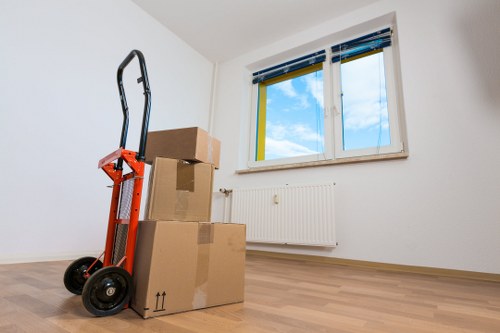
Every business has different needs, and commercial relocations in Notting Hill often involve more than one type of item or room. We commonly support businesses with office removals, shop moves, stock transfers, hospitality equipment relocations, and studio transitions. If your move involves both front-of-house and back-of-house areas, we can help coordinate the whole process so nothing is overlooked.
Common examples include office relocations with desks, monitors, and filing systems; retail moves with display units, stock, and point-of-sale items; restaurant and café moves involving tables, chairs, kitchen equipment, and storage; and creative workspace moves where artwork, production materials, or specialist equipment need careful handling. We also assist with internal business moves, such as shifting departments, reorganising floors, or moving into a larger suite within the same building.
For businesses in shared premises or managed buildings, the move may also require coordination with building management, concierge teams, or landlords. That can include booking lift times, protecting common areas, or following specific rules for loading and unloading. A local commercial removals team can work with those constraints so the move runs smoothly and your premises are left tidy and orderly.
Areas of Notting Hill and Nearby Locations We Cover
When businesses look for commercial moving support, they often need a team that can work across the immediate neighbourhood and nearby West London areas. Notting Hill itself includes a wide range of property types and business settings, and many companies also move between neighbouring districts. This makes local coverage especially useful when your relocation involves more than one postcode or a chain of premises.
We regularly help with moves around central Notting Hill and nearby locations such as Ladbroke Grove, Holland Park, Kensington, Bayswater, Westbourne Grove, North Kensington, and Maida Vale. These areas can present different access conditions and building styles, from high-street retail units to converted townhouses and small offices in mixed-use blocks. Understanding those differences helps the move run with fewer delays and less disruption.
If your business sits near a busy commercial strip, a residential street with limited parking, or a building with strict loading restrictions, local planning becomes even more important. This is especially true where you need to manage multiple trips, delicate items, or a very specific moving schedule. A team that works regularly in and around Notting Hill can plan the route, timing, and handling requirements with real local awareness.
What Is Included in a Commercial Move

A good commercial removals service should do more than simply arrive on the day and transport everything. Businesses benefit most from a structured service that covers preparation, careful handling, and efficient placement at the new location. The exact scope will depend on the size and nature of your move, but the following elements are often included or available as part of the plan.
- Initial discussion of your moving needs and schedule
- Assessment of access, stairways, lifts, parking, and loading space
- Packing support for office contents, stock, and sensitive items
- Labelling and organisation of boxes and equipment
- Dismantling and reassembly of selected furniture where appropriate
- Safe transport of business assets to the new premises
- Placement of items into designated rooms or areas
- Help with phased or multi-stage relocations
- Careful handling of fragile, bulky, or specialist items
- Clear communication throughout the move day
Important: commercial moves are often more successful when packing and labelling are done with the destination layout in mind. That way, desks, files, stock, and equipment can be placed efficiently instead of being sorted again after delivery. If your team is short on time, a managed packing plan can save significant disruption.
In some cases, customers want a full-service move. In others, they only need transport and loading help. The benefit of using a local commercial moving company is that the service can be adjusted to match the exact level of support your business needs, without forcing you into an unnecessary package.
How the Moving Process Works
Commercial moving works best when it is planned in stages. That usually starts with an enquiry, followed by a discussion of the premises, item list, preferred timing, and any constraints at either end of the move. For businesses in Notting Hill, this early planning phase is especially valuable because access and parking can influence the best day and time to move.
Once the move is agreed, the next step is preparation. This may include checking what needs packing, identifying items that require special handling, and arranging access permissions if the building has rules around loading bays, lifts, or common areas. If the relocation involves a retail or hospitality venue, there may also be stock rotation or equipment shutdown timing to consider. The more organised the preparation, the easier the moving day will be.
On the day itself, the team will load items carefully, keep fragile and heavy items secure, and transport them to the destination in an orderly way. At the new premises, items can be placed according to the plan so staff can resume work more quickly. If the move is staged, the process can be repeated over several visits to suit business continuity. Request a free quote if you want to discuss timings and a move plan that fits around your operations.
Preparation Checklist for Business Owners

Good preparation makes a huge difference to commercial relocation. Before moving day, it helps to work through a practical checklist so there are fewer surprises. The right preparation can also reduce the amount of downtime after the move, especially if your team needs to get back to serving customers or clients quickly.
- Confirm your move date and any building access requirements.
- Decide which items are moving, storing, or being disposed of separately.
- Label boxes clearly by department, room, or priority.
- Back up important digital files and safely disconnect equipment.
- Notify staff of the moving schedule and their responsibilities.
- Empty and secure confidential paperwork or sensitive materials.
- Arrange parking or loading arrangements if required by the building.
- Measure doorways, staircases, and lift dimensions for larger items.
- Set aside essential items needed for the first day in the new premises.
- Plan how you will reopen or resume work after the relocation.
If you are moving a shop, salon, café, practice, or office, it is especially useful to identify the items that should be loaded last and unloaded first. These are the things your business needs to function immediately after arrival. Keep them separate and label them clearly so the new setup is easier to manage.
Some businesses also benefit from a short internal walk-through before the move. This helps decide what can be packed in advance and what should remain accessible until the final day. It is a simple step, but it often makes the move smoother and more efficient.
Pricing Factors for Commercial Moves in Notting Hill
Commercial moving costs can vary significantly because every business move is different. Rather than offering a fixed price that ignores the details, it is better to understand the factors that shape the final quote. That way, you can plan properly and compare options on a like-for-like basis.
Some of the most important pricing factors include the size of the premises, the quantity of items being moved, the number of floors involved, access conditions, the distance between locations, and whether the move needs to happen outside normal business hours. Additional support such as packing, furniture dismantling, or handling of fragile equipment can also affect the overall cost.
In Notting Hill, parking and loading access can be a major factor because a move may take longer if the vehicle cannot park directly outside, or if multiple trips are needed. Likewise, buildings with narrow stairs, no lift access, or limited loading windows may require extra labour and time. Clear information at the quotation stage helps avoid delays and ensures the service is tailored correctly from the start.
What Can Affect Your Quote

When requesting a quote for a commercial move, it helps to know which details make the biggest difference. These are the usual factors businesses should be ready to discuss:
- The type of business premises and the items to be moved
- Whether the move is local, nearby, or between different West London areas
- How much packing support is required
- Whether large, fragile, or specialist items are involved
- Access to lifts, stairwells, courtyards, and loading bays
- Need for evening, weekend, or phased relocation work
- Any requirement to dismantle or reassemble furniture
- Special building rules or time restrictions at either location
When you provide accurate details early on, the quote is more useful and the move is more likely to run to schedule. If your business has multiple departments, multiple floors, or a mix of stock and office equipment, be sure to mention that as well.
It is also worth asking about flexibility. Commercial moves often change as a lease completion date shifts, staff availability changes, or access arrangements are confirmed. A local service is often better placed to adapt when those practical realities arise.
Why Businesses Choose a Local Commercial Removals Team
There are plenty of reasons businesses in Notting Hill prefer a local moving company over a generic service from further away. The first is responsiveness. When you are running a business, timing matters, and a local team can often plan more efficiently around your schedule. The second is area knowledge. A team that already understands nearby streets, access routes, and common parking constraints can avoid wasted time and confusion.
Another major advantage is the ability to handle the character of the area. Notting Hill includes busy commercial streets, tucked-away office spaces, and elegant period buildings that may look straightforward from the outside but require careful handling inside. Local experience helps with those details, especially where the move involves valuable equipment, stock, or customer-facing spaces that need to stay presentable.
Commercial Moves in Notting Hill also benefit from a team that understands how important discretion and professionalism can be. Many businesses want a move that does not disrupt neighbouring properties, shared occupiers, or clients visiting nearby premises. A well-managed local move can help preserve that sense of order and minimise the stress that often comes with business relocation.
Commercial Property Types in the Area
One reason Notting Hill moves can be so varied is the wide range of property types found across the district. A boutique retailer on a lively street may have display units, stock rooms, and customer areas to relocate. A consultancy may be based in a converted townhouse with multiple floors and narrow stairs. A wellness clinic may need sensitive handling of equipment and patient-facing furniture. Each setting comes with different practical needs.
Shared offices and mixed-use properties are also common in the area. These often involve a blend of commercial and residential access rules, which means timing and coordination are especially important. If your business operates from a building where other occupants are still working or living on-site, the move needs to be considerate as well as efficient. That is where a methodical approach really helps.
Many local businesses also operate in spaces that have been adapted over time rather than built as modern offices. That can mean bespoke shelving, fitted counters, delicate finishes, or older doorframes that need extra care. A commercial relocation team should be prepared for these conditions and work with them, not against them.
Support for Different Types of Business Moves
Some customers need help with a single unit move, while others are relocating across several spaces. We can support:
- Small business and start-up relocations
- Office downsizing or expansion moves
- Retail stock and display transfers
- Restaurant, café, and hospitality changes
- Studio and creative workspace moves
- Clinic, salon, and consultation room relocations
- Internal reorganisation within the same building
Each of these move types requires a slightly different plan. For example, a retail business may need the new shop to be set up in a customer-friendly way before opening day, while a studio may care most about safe transit of equipment and efficient unpacking. A good commercial moving service takes those priorities seriously and builds the move around them.
How to Prepare Your Team and Premises
Commercial relocation affects more than the items being moved. It also affects the people who work in the space. Staff preparation can make a major difference to how smoothly the move is completed and how quickly your team settles into the new premises. Sharing the plan early helps everyone know what to pack, what to leave, and what to expect on the day.
It can also help to assign a move coordinator from your business. That person can oversee labelling, answer questions, and confirm which items are priority loads. For larger teams, it may be useful to split responsibilities by department so that each section knows exactly what it needs to do. This avoids confusion and keeps the move structured.
For customer-facing businesses, think about continuity too. If you need to close for a period, let your operations plan account for setup time at the new premises. If you are moving in stages, decide which functions must remain active until the last possible moment. These details are practical, but they are also what make a commercial move successful in real life.
Frequently Asked Questions
How far in advance should I arrange a commercial move?
It is best to arrange commercial relocation as early as possible, especially if you need a specific date, weekend scheduling, or building access permissions. The more notice you give, the easier it is to plan around your business needs and local access conditions.
Can you help with office furniture and equipment?
Yes. Office desks, chairs, filing systems, monitors, and other business equipment are commonly included in commercial moves. If you have specialist items, fragile equipment, or larger furniture, mention them during the enquiry so the service can be planned properly.
Do you work outside normal business hours?
Many commercial customers prefer evening, early morning, or weekend moves to reduce disruption. Availability can depend on the scope of the move and scheduling, so it is worth discussing this as early as possible.
What if my building has difficult access?
That is common in Notting Hill and surrounding West London areas. Tight staircases, limited loading zones, and shared entrances can all be managed with the right planning. Let the moving team know about the access setup in advance so the most suitable approach can be arranged.
Can you help with phased moves?
Yes. Many businesses cannot relocate everything in one go. Phased moves are often the best option for companies that need to stay operational while moving departments, stock, or equipment in stages.
What should I do with confidential files and sensitive items?
Confidential files, data-related materials, and sensitive items should be packed and labelled carefully, with access controlled by your team. If needed, ask for guidance on how to separate these items from general office contents.
Get Ready to Move Your Business with Less Disruption
Commercial relocation in Notting Hill does not have to feel overwhelming. With the right planning, clear communication, and a team that understands local access conditions, your move can be organised, efficient, and far less disruptive than many businesses expect. Whether you are relocating a small office, a retail unit, a hospitality space, or a mixed commercial property, the right support can save time and reduce stress.
If you are preparing for a business relocation and want a service that fits the realities of working in this part of West London, now is the right time to take the next step. Think about your timeline, the type of premises involved, and the level of help you need with packing, transport, and setup. Then contact us today to discuss your move and request a free quote.
Book your service now if you want a local, practical solution for commercial moves in Notting Hill and nearby areas. A well-planned move can help your business stay organised, protect your assets, and reopen with confidence.